An Hour on the Table, Minute by Minute: The Hidden Physiology of a Massage
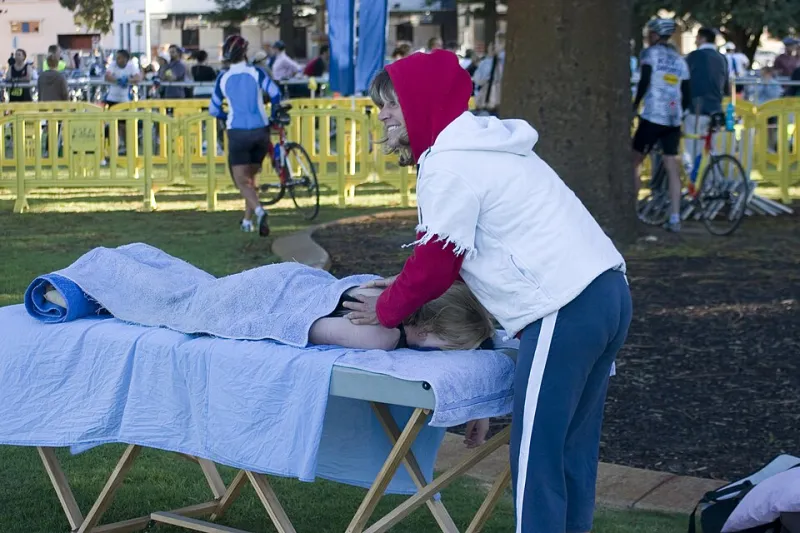
Photo: Bob Whitehead from Perth, Australia, CC BY 2.0, via Wikimedia Commons
From the outside, a massage looks gloriously uneventful. A person. A table. Some slow, deliberate pressure. But underneath the flannel sheet, your body is busy conducting a full-system recalibration—one that starts within minutes and keeps paying dividends for hours afterward.
Here's a chronological tour of the hour, based on what massage research and physiology tell us is going on.
Minutes 0–10: The Handoff to Your Parasympathetic System
The first few minutes are about permission. As the therapist begins with broad, rhythmic strokes—often called effleurage—your nervous system gets a signal it rarely receives in daily life: you are safe, and you can stand down.
This is the parasympathetic nervous system, your 'rest and digest' mode, taking the wheel from the fight-or-flight state most of us marinate in. Heart rate begins to slow. Breathing deepens. Blood pressure often dips. Studies measuring cortisol have found reductions after massage sessions, and the groundwork for that shift happens right here, in the opening minutes.
Minutes 10–25: Muscles Start to Let Go
Now the therapist moves into deeper, more specific work—kneading (petrissage), sustained pressure, friction. What's happening in the tissue is partly mechanical and partly neurological.
Mechanically, sustained pressure and warmth increase local blood flow, bringing fresh oxygen to muscle tissue that's been running tight and slightly oxygen-starved. Neurologically, pressure receptors in your skin and muscle—called mechanoreceptors—respond to the work by dialing down the firing of the muscle's resting tension. In plain terms: the muscle gets a chemical 'you can relax now' message, and often, it does.
This is also when a skilled therapist works around trigger points—those tender knots that refer pain elsewhere. Whether trigger points are muscle, fascia, or nervous-system artifacts is still debated, but pressing and releasing them frequently produces that unmistakable 'melting' sensation.
Minutes 25–40: Circulation Goes to Work
The middle stretch of the session is often where the circulatory benefits build. Rhythmic compression of tissue acts something like a pump for your veins and lymphatic system, encouraging blood and lymph to move through areas that have been stagnant—especially if you sit for a living.
You may notice your skin flushing warm, or your hands and feet feeling warmer than usual. That's increased peripheral circulation. Some people also notice the urge to swallow or even drift toward sleep here—the classic sign that the nervous system has fully settled.
Minutes 40–55: The Hormonal Ripple
By this point, the chemical picture has shifted. Research on massage has documented decreases in the stress hormone cortisol alongside increases in serotonin and dopamine—the neurotransmitters tied to mood and calm. Endorphins, your body's natural pain modulators, are also in play, which is part of why sore spots feel less angry at the end of a session than they did at the start.
This hormonal shift is why many people report a floaty, almost meditative state in the final stretch of an hour—not sleepy exactly, but deeply unbothered.
Minutes 55–60 (and Beyond): The Wind-Down and the Payoff
The last few minutes usually involve gentler, integrative strokes—a signal to your system that the session is closing. When you sit up, you might feel taller, looser, or slightly spacey. That's normal. Hydrate, move slowly, and give yourself a buffer before re-entering the world.
The benefits don't stop when you leave the room. Studies suggest massage can improve sleep quality the same night, and reduced muscle tension can persist for days. Some research even points to modest immune-system effects, though that science is still developing.
The Takeaway
An hour of massage isn't passive time—it's a coordinated cascade: nervous system downshift, muscular release, circulatory boost, and hormonal rebalance, all triggered by skilled touch. Knowing what's happening under the sheet doesn't make the experience less relaxing. If anything, it makes the calm feel earned.

